
By the time evening arrives, your mind may still be carrying everything that happened during the day. There are unfinished tasks, conversations you keep replaying, responsibilities waiting for tomorrow, and concerns that become louder once everything else grows quiet.
Even when your body is ready to rest, your thoughts may not be.
For Christians, an evening routine can offer an opportunity to reflect, pray, and approach the end of the day with greater intention. It creates space to acknowledge what went well, recognize what was difficult, and bring unresolved concerns before God.
However, a meaningful Christian evening routine does not require an elaborate devotional schedule or a perfectly peaceful bedroom.
It can begin with a few simple practices that fit naturally into your life.
The purpose is not to finish every day feeling spiritually accomplished. It is to develop a thoughtful way of ending the day with prayer, Scripture, gratitude, and rest.
Quick Answer: How Can You End Your Day With God?
You can end your day with God by setting aside a few minutes for prayer, reflecting on your experiences, reading a short Bible passage, and expressing gratitude. You may also confess mistakes, pray for others, and bring tomorrow's concerns before God.
A Christian evening routine can be as simple as five minutes of quiet reflection or a longer devotional period. What matters most is sincerity and consistency, not the length of the routine.
Why an Evening Faith Routine Can Be Meaningful
Mornings are often associated with fresh starts and new opportunities. Evenings, however, provide a different kind of spiritual opportunity.
They allow you to look back.
Throughout the day, you may have experienced moments of gratitude, frustration, uncertainty, kindness, disappointment, or unexpected encouragement.
Without taking time to reflect, those experiences can pass without much consideration.
An evening faith routine creates space to examine how you responded to people, what you learned, and where you may need wisdom.
It also encourages you to recognize that your relationship with God is not limited to the beginning of the day.
Faith can shape how you finish your responsibilities, respond to unresolved problems, and prepare for rest.
Does the Bible Teach Christians to Pray Before Bed?
The Bible includes examples of prayer and reflection during the evening and nighttime, but it does not require every Christian to follow a specific bedtime prayer schedule.
Psalm 4:8 expresses confidence in God's care while lying down to sleep.
Psalm 63:6 describes remembering and meditating on God during the night.
Daniel 6:10 portrays Daniel praying regularly throughout the day, while other passages encourage believers to maintain a broader life of prayer.
These examples demonstrate that nighttime prayer can be meaningful without establishing one mandatory routine.
The New Testament also encourages ongoing prayer rather than restricting communication with God to particular hours.
An evening routine is therefore a helpful spiritual practice, not a requirement for earning God's approval.
Begin by Allowing Your Day to Slow Down
One challenge with evening devotionals is that many people move directly from demanding responsibilities into bed.
You may finish work, respond to messages, prepare for the next day, and continue scrolling through your phone until you are ready to sleep.
In that situation, even a short prayer can feel rushed.
Creating a small transition between daytime responsibilities and nighttime rest may help.
You might put away work materials, dim unnecessary lights, change into comfortable clothing, or spend a few minutes away from notifications.
These activities are not inherently spiritual, but they can create an environment that supports reflection.
The goal is to make room for a quieter moment rather than expecting your mind to become calm immediately.
Reflect on Your Day Without Judging Every Moment
Evening reflection can help you recognize patterns in your thoughts and behavior.
Consider what happened during the day and how you responded.
Was there a conversation that required patience? Did someone show you kindness? Were you able to help another person? Did you make a decision you now want to reconsider?
These questions can encourage thoughtful self-examination.
However, reflection should not become an exercise in criticizing yourself for every mistake.
Christian teaching recognizes the importance of repentance and growth, but it also emphasizes grace and forgiveness.
The purpose is to develop awareness and wisdom, not to replay every imperfect moment until you feel discouraged.
Make Gratitude Part of Your Evening Prayer
Gratitude can help you recognize meaningful experiences that might otherwise be overlooked.
You may be thankful for a productive conversation, a supportive friend, a meal, an opportunity, or the strength to manage a demanding day.
First Thessalonians 5:18 encourages believers to give thanks in all circumstances.
However, gratitude should not be confused with pretending that every circumstance is good.
A difficult day can still be difficult.
You can acknowledge disappointment, grief, or frustration while also recognizing moments of kindness or provision.
An evening gratitude practice should make room for honesty rather than require constant positivity.
Bring Unfinished Concerns Before God
One reason evenings can feel stressful is that the day's concerns do not always end when your responsibilities do.
A conversation may remain unresolved. A financial decision may still require attention. You may be uncertain about tomorrow.
Philippians 4:6–7 encourages believers to bring their requests before God through prayer and thanksgiving.
This passage does not promise that every problem will disappear immediately.
Instead, it directs believers toward prayer and describes the peace of God in relation to their concerns.
During your evening routine, you can name the situations that are troubling you.
Ask for wisdom, patience, courage, or help in responding responsibly.
Prayer does not eliminate the need for practical action, but it can become part of how you approach uncertainty.
Practice Confession and Forgiveness
Evening reflection may reveal moments when your behavior did not reflect your values.
Perhaps you responded impatiently, spoke harshly, neglected a responsibility, or allowed frustration to influence a decision.
Acknowledging those moments can be an important part of Christian growth.
First John 1:9 speaks about confession and God's faithfulness to forgive.
You can bring mistakes before God honestly without attempting to justify them.
Where appropriate, repentance may also involve practical steps, such as apologizing to someone or changing a harmful pattern.
However, forgiveness should not become an excuse to ignore accountability.
A meaningful evening routine encourages both humility and a willingness to make things right.

Read Scripture Before Bed
Bible reading can provide a thoughtful conclusion to the day.
Some people prefer reading a Psalm because the Psalms include expressions of worship, trust, gratitude, grief, and prayer.
Others enjoy reading a Gospel passage or continuing through a New Testament letter.
The amount you read does not need to be extensive.
A short passage can provide enough material for reflection, particularly when you take time to understand its context.
If you are following a Bible reading plan, evening reading may simply be the time that best fits your schedule.
Avoid treating Scripture as a collection of phrases designed only to produce a particular feeling.
Its value includes teaching, correction, encouragement, and a deeper understanding of God and Christian faith.
Bible Verses to Read Before Bed
Several passages are especially relevant to evening reflection because they address rest, trust, prayer, and God's care.
Psalm 4:8 — Resting in God's Care
Psalm 4:8 expresses confidence in God's protection while lying down to sleep.
The verse appears within a psalm that addresses distress and trust.
It can encourage reflection on dependence on God, even when circumstances remain uncertain.
Psalm 23 — Remembering God's Guidance
Psalm 23 presents God as a shepherd who provides, guides, and remains present through difficult experiences.
It is a meaningful passage for reflecting on trust and care.
Philippians 4:6–7 — Bringing Concerns to God
These verses encourage prayer and thanksgiving rather than allowing anxiety to dominate.
They can provide a framework for bringing unresolved concerns before God at the end of the day.
Matthew 11:28–30 — Finding Rest in Christ
Jesus invites those who are weary and burdened to come to Him.
The passage speaks about discipleship and the kind of rest associated with His teaching and care.
It should not be reduced to a guarantee that every physical or emotional burden will disappear immediately.
Psalm 121 — Remembering God's Watchful Care
Psalm 121 emphasizes God's protection and faithfulness.
It can be meaningful for evening reflection, particularly when considering the responsibilities and uncertainties of the coming day.
Read each passage within its surrounding context to appreciate its fuller meaning.
A Simple Five-Minute Christian Evening Routine
If you are tired or have limited time, a short routine can still provide an opportunity for reflection.
Minute 1: Pause
Set aside distractions and take a moment to become attentive.
Minute 2: Express Gratitude
Thank God for something meaningful from the day.
Minute 3: Reflect
Consider one experience that challenged or encouraged you.
Minute 4: Read Scripture
Read a short Bible passage and identify its central message.
Minute 5: Pray
Bring your concerns before God and ask for wisdom and strength for the next day.
This structure is an example rather than a requirement.
You can adjust it according to your needs and available time.
A 15-Minute Evening Devotional Routine
If you have more time, consider dividing your devotional period into prayer, Scripture reading, and reflection.
Begin with a few minutes of quiet prayer.
Next, read a passage from the Bible and consider what it teaches within its context.
Use several minutes to reflect on your day, either silently or in a journal.
You might end by praying for people who need support or for responsibilities awaiting you tomorrow.
A fifteen-minute routine can provide space for thoughtful engagement without requiring an elaborate schedule.
Should You Keep an Evening Prayer Journal?
An evening prayer journal can help you organize your thoughts and record meaningful experiences.
You might write about something you learned, a prayer request, a difficult conversation, or a Bible passage that challenged you.
Some people also find it useful to record questions they want to explore later.
Journaling does not need to be lengthy.
A few sentences may be enough.
If writing helps you process the day, it can become a valuable part of your routine.
However, it is optional.
You can practice meaningful prayer and reflection without keeping a written record.
Create a Bedroom Environment That Supports Rest
Your surroundings can influence how comfortable and restful your evening feels.
A bedroom that doubles as a workspace may contain reminders of unfinished responsibilities.
Clutter, bright lighting, and constant notifications can also make it difficult to transition away from daytime activities.
Consider small adjustments that fit your circumstances.
You might clear your bedside table, use softer lighting, or keep work materials out of sight when possible.
Comfortable bedding and a consistent sleep schedule can also support rest.
These choices are practical rather than spiritual requirements.
Their purpose is to create an environment where you can recover and prepare for the next day.
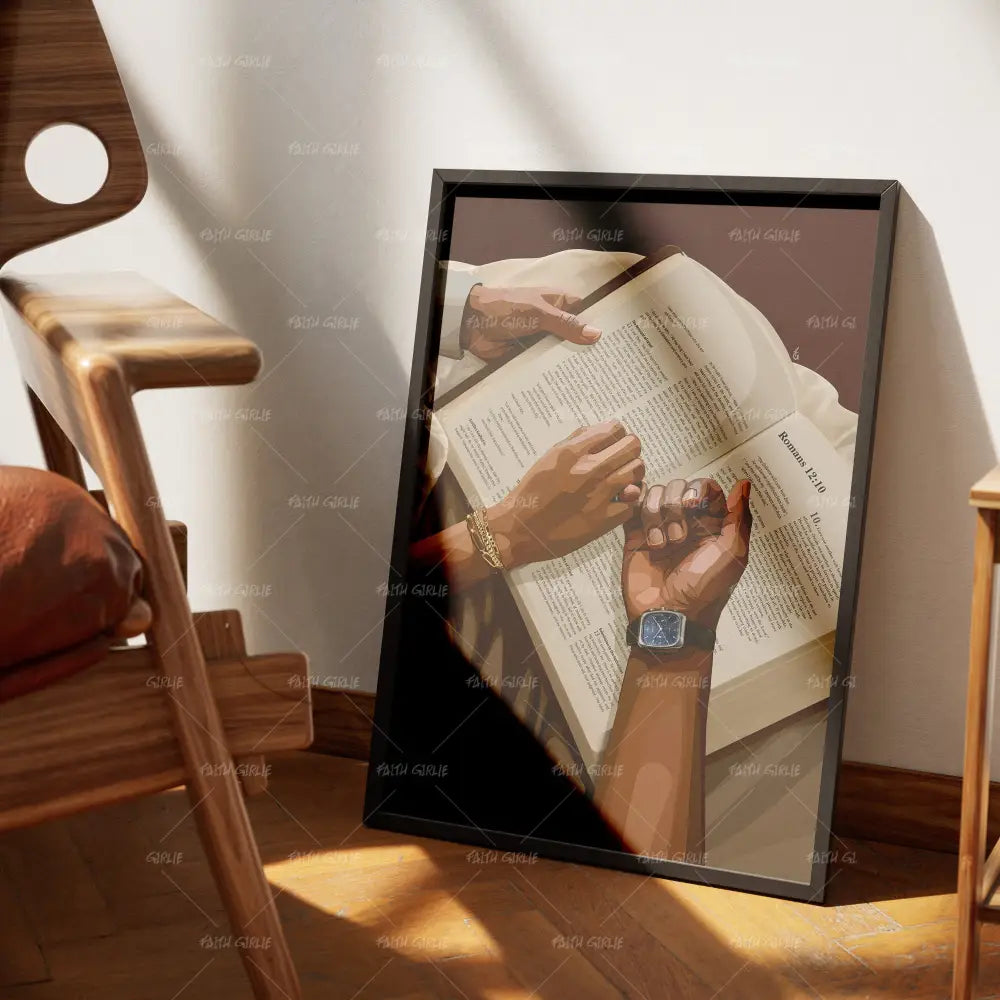
Can Christian Wall Art Support an Evening Routine?
Christian wall art can provide visual reminders of Scripture and faith.
A Bible verse displayed near your bed may encourage reflection before sleep.
For example, artwork inspired by Psalm 4:8 can remind you of the psalmist's trust in God's care.
A piece featuring Philippians 4:6–7 may encourage you to bring concerns before God through prayer.
However, the artwork itself does not create spiritual peace.
Its value comes from the meaning of the passage and the reflection it encourages.
Choose designs that fit naturally into your bedroom and connect with biblical themes that matter to you.
Avoid Turning Bedtime Prayer Into Another Task
One challenge with devotional routines is the temptation to measure their value through completion.
You may begin feeling that every evening must include a certain number of prayers, Bible chapters, or journal pages.
When the routine becomes too demanding, it can create frustration rather than support meaningful reflection.
A Christian evening routine should not become a test of whether you have done enough to deserve rest.
If you are exhausted, a brief prayer may be more realistic than an extended study session.
If you miss an evening, return to the practice when possible.
The goal is consistency supported by grace, not perfection.

What If You Still Feel Anxious After Praying?
Prayer can be a meaningful response to worry, but it does not guarantee that anxious feelings will disappear immediately.
Some concerns involve circumstances that require practical action, professional guidance, or support from others.
You may need to make a plan, seek advice, establish boundaries, or address an ongoing problem.
Christian faith does not require ignoring those responsibilities.
If anxiety is persistent or significantly affects sleep and daily functioning, speaking with a qualified healthcare or mental health professional may be helpful.
Prayer and appropriate support do not have to compete with each other.
A healthy evening routine can include both spiritual reflection and practical care for your well-being.
How to Create an Evening Routine With Children
Families with children may benefit from simple bedtime practices that introduce prayer and Scripture naturally.
A short Bible story, a moment of gratitude, or a brief family prayer can become part of the evening.
However, children have different developmental needs and attention spans.
A lengthy devotional activity may not be appropriate for every age.
Parents can also model Christian values through patience, kindness, and the way they respond to bedtime challenges.
The purpose is not to make every evening perfectly organized.
It is to create meaningful moments of connection and faith within ordinary family life.
What If Your Schedule Changes Every Day?
Not everyone has a predictable bedtime.
Shift workers, parents, students, and people with demanding responsibilities may find that their evenings vary considerably.
In these situations, a flexible routine may be more sustainable than one tied to a particular hour.
You might pray after finishing work, read Scripture before your main sleep period, or reflect during a quiet break.
The routine can follow the end of your personal day rather than a traditional evening schedule.
What matters is finding an approach that fits your circumstances without creating unnecessary pressure.
Faith Girlie: Creating Meaningful Spaces for Evening Reflection
At Faith Girlie, we believe faith can be reflected in the ordinary spaces where people begin and end their days.
A bedroom can become more than a place to sleep. It can also provide opportunities for prayer, gratitude, and quiet reflection.
Our Christian wall art, Bible verse designs, prayer-inspired artwork, and contemporary faith-based pieces explore themes such as peace, rest, trust, hope, and God's faithfulness.
A thoughtfully chosen Scripture print can serve as a visual reminder of a meaningful passage.
Contemporary Christian artwork can also bring personal style and spiritual significance into your bedroom.
The goal is not to create a perfectly decorated devotional space.
It is to make room for reflection within everyday life.
Frequently Asked Questions
What is a good Christian evening routine?
A Christian evening routine may include prayer, Bible reading, gratitude, reflection, and practical habits that support rest. The specific activities can vary according to your schedule.
How do I end my day with God?
Take a few minutes to reflect on your experiences, thank God, acknowledge concerns or mistakes, read Scripture, and pray.
What Bible verse should I read before bed?
Psalm 4:8, Psalm 23, Psalm 121, Philippians 4:6–7, and Matthew 11:28–30 are meaningful passages for evening reflection.
Do Christians have to pray before sleeping?
The Bible encourages prayer but does not establish a universal bedtime prayer requirement.
How long should an evening devotional last?
There is no required duration. A short devotional period can be meaningful when approached thoughtfully.
Can I listen to worship music before bed?
Yes. Worship music may help you reflect on Christian themes and transition into a quieter part of the day.
Is it okay to fall asleep while praying?
Falling asleep during prayer does not mean your faith is inadequate. If exhaustion frequently interrupts your routine, consider praying earlier or shortening the devotional period.
Can Christian wall art help create a peaceful bedroom?
Christian wall art can provide meaningful reminders of Scripture and faith, although the artwork itself does not guarantee peace or better sleep.
What if I miss my evening prayer routine?
Return to the practice when you can. A missed evening does not erase your progress or determine the strength of your relationship with God.
Final Thoughts
A Christian evening routine does not need to be elaborate to be meaningful.
You can begin with a short prayer, a Bible passage, and a few moments of honest reflection.
Some evenings may provide enough time for journaling and extended study. Others may leave you with only a few quiet minutes.
Both can become opportunities to engage with your faith.
The purpose is not to finish every day perfectly or resolve every concern before sleeping.
It is to develop a habit of bringing your experiences before God, learning from Scripture, and approaching rest with greater intention.
At Faith Girlie, we create Christian wall art, Bible verse designs, prayer-inspired artwork, and contemporary faith-based pieces that encourage meaningful reflection on Scripture, prayer, peace, and everyday Christian living.


Leave a comment
This site is protected by hCaptcha and the hCaptcha Privacy Policy and Terms of Service apply.