
Your home should be a place where you can recover from the demands of everyday life. Yet even a beautifully decorated space can feel overwhelming when responsibilities pile up, relationships become strained, or your mind remains occupied with unfinished tasks.
For Christians, creating a peaceful home involves more than choosing calming colors, arranging comfortable furniture, or keeping everything organized. Those decisions can improve the atmosphere of a space, but biblical peace reaches beyond physical surroundings.
A peaceful Christian home is one where faith influences how people respond to stress, communicate with one another, establish boundaries, and approach everyday challenges.
It does not have to be silent, perfectly organized, or free from disagreement. Instead, it can become a place where people experience kindness, emotional safety, thoughtful routines, and opportunities to rest.
Understanding what Scripture teaches about peace provides a meaningful starting point for creating that environment.
Quick Answer: How Can Christians Create a More Peaceful Home?
Christians can create a more peaceful home by practicing respectful communication, developing consistent prayer habits, setting healthy boundaries, reducing unnecessary household stress, and making room for rest. Meaningful Bible verses and Christian wall art can also provide visual reminders of faith. However, genuine peace depends more on the way people live and treat one another than on the appearance of their surroundings.
What Does the Bible Say About Peace in the Home?
The Bible discusses peace in several interconnected ways.
Peace can describe reconciliation, harmonious relationships, freedom from hostility, and the confidence believers have through their relationship with God.
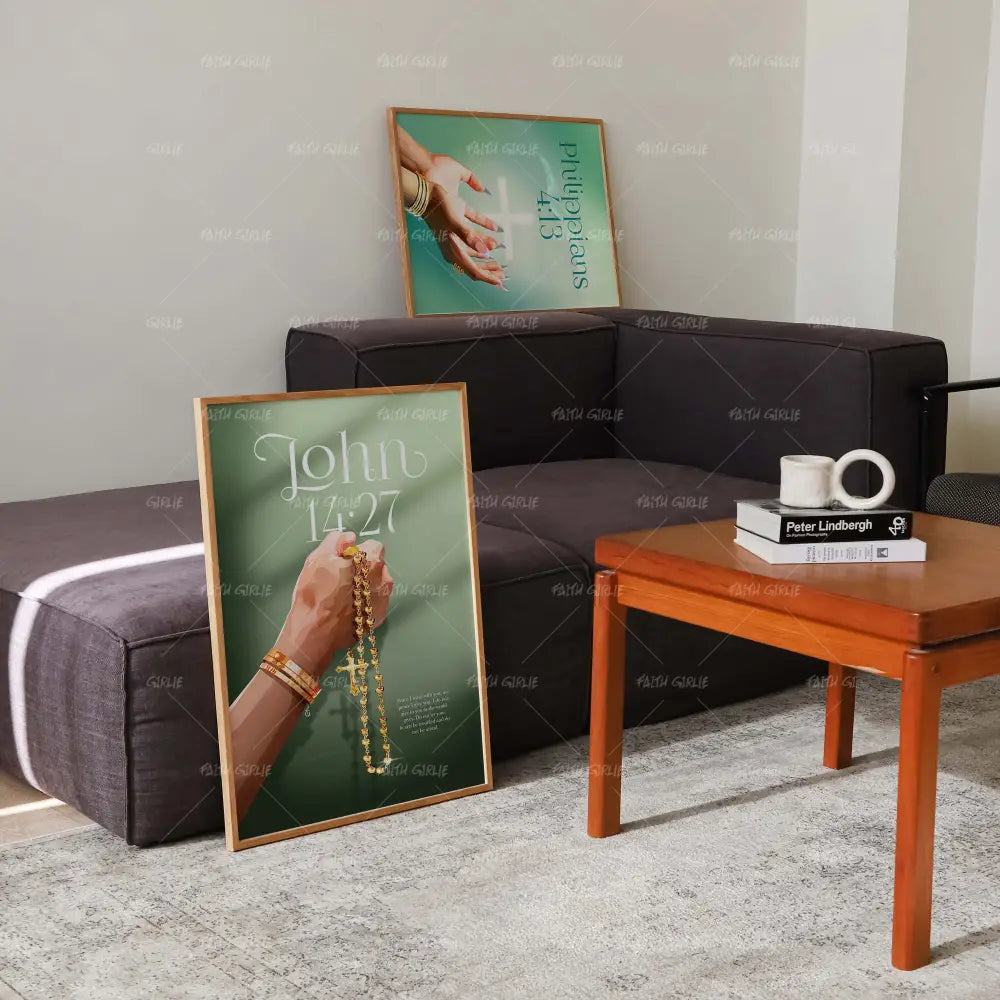
In John 14:27, Jesus speaks about giving His disciples peace that differs from what the world offers. The passage appears within His teaching to the disciples before His arrest and points toward the reassurance they would need amid uncertainty.
Philippians 4:6–7 connects prayer, thanksgiving, and God's peace, while Romans 12:18 encourages believers to live peaceably with others as far as it depends on them.
Together, these passages show that biblical peace is not simply the result of having a quiet room or an uncomplicated life.
It involves trust, relationships, and a way of responding to circumstances.
A Christian home can therefore pursue peace even when its occupants are experiencing difficult seasons.
A Peaceful Home Does Not Have to Be a Perfect Home
One of the most important distinctions is between peace and perfection.
A peaceful home may still contain children's laughter, busy mornings, unfinished laundry, difficult conversations, and unexpected interruptions.
There may be days when everyone feels tired or responsibilities become overwhelming.
These realities do not automatically mean that a household lacks peace.
The more important question is how people respond when ordinary life becomes difficult.
Are mistakes acknowledged? Can disagreements be discussed respectfully? Do household members feel comfortable expressing concerns? Is there room for forgiveness, rest, and personal boundaries?
A home that allows people to be honest and imperfect may provide greater peace than one where everyone feels pressured to maintain a flawless appearance.
Begin With the Emotional Atmosphere of Your Home
When people think about improving their homes, they often begin with furniture, paint, lighting, or organization.
However, the emotional atmosphere of a household can have a greater influence on how peaceful it feels.
A beautifully furnished room may still feel uncomfortable when conversations are consistently harsh or household members are afraid of being criticized.
Proverbs 15:1 teaches that a gentle answer can turn away wrath, while harsh words can stir up anger.
This principle can be applied to everyday communication.
Speaking respectfully, listening before reacting, and choosing appropriate moments for difficult conversations can reduce unnecessary tension.
A peaceful atmosphere is not created by avoiding every disagreement. It develops when people can address problems without routinely resorting to hostility or humiliation.
Practice Patience in Everyday Relationships
Patience is easy to appreciate in theory but often difficult to practice when people share responsibilities and living spaces.
Different personalities, habits, expectations, and schedules can create frustration.
One person may prefer everything organized, while another is comfortable with a more relaxed environment. Family members may disagree about household responsibilities or how to spend their time.
Colossians 3:12–14 encourages compassion, kindness, humility, gentleness, patience, forgiveness, and love.
These qualities can help shape how Christians approach everyday relationships.
Instead of assuming that everyone should think or behave exactly as you do, consider whether expectations are reasonable and clearly communicated.
Patience does not mean accepting disrespect or refusing to address problems. It means approaching those problems with self-control and concern for others.
Create Healthy Boundaries That Protect Peace
A peaceful Christian home should have room for healthy boundaries.
Sometimes people associate Christian kindness with always being available, agreeing to every request, or avoiding the word "no."
However, constantly ignoring personal limitations can contribute to exhaustion and resentment.
Healthy boundaries help clarify responsibilities, protect necessary rest, and encourage respectful relationships.
For example, a household might establish quiet hours, agree on how shared spaces are used, or decide when visitors are welcome.
A person working from home may need uninterrupted periods for concentration. Parents may need consistent routines for their children, while roommates may benefit from clearly defined expectations about privacy and shared responsibilities.
Boundaries are not necessarily signs of selfishness.
When communicated thoughtfully, they can help people live together with greater understanding.

Reduce Clutter Without Making Organization an Obsession
Physical surroundings can influence how comfortable and manageable a home feels.
A crowded desk may make it difficult to concentrate, while an overcrowded living room can feel visually overwhelming.
Reducing unnecessary clutter may create more usable space and make everyday tasks easier.
However, organization should remain a practical tool rather than becoming another source of pressure.
A Christian home does not need to resemble a perfectly styled photograph.
Instead of trying to organize everything at once, begin with areas that affect your daily experience most.
Perhaps your bedside table has become crowded with objects you rarely use, or your entryway makes leaving the house unnecessarily stressful.
Small improvements can make these spaces more functional.
The purpose is to support everyday life, not to create an unrealistic standard of perfection.
Use Lighting and Color to Create a Calmer Environment
The physical design of a room can also contribute to its atmosphere.
Natural light, comfortable seating, thoughtful furniture placement, and appropriate lighting can make a space feel more welcoming.
Some people prefer soft neutral colors, while others feel most comfortable surrounded by warm tones or expressive color.
There is no single color palette that makes a home peaceful.
A bright, colorful room can feel restful when the design is balanced and meaningful to the person living there. Likewise, a minimalist room may feel uncomfortable if it does not reflect the owner's preferences.
Rather than following a rigid decorating formula, consider how the room is used.
A bedroom may benefit from softer lighting in the evening, while a home office may require brighter task lighting.
Choose design elements that support the activities and atmosphere you want to encourage.
Make Room for Prayer Without Creating Pressure
Prayer can be a meaningful part of developing a peaceful Christian home.
Philippians 4:6–7 encourages believers to bring their concerns to God through prayer and thanksgiving.
This does not mean that praying will instantly remove every stressful circumstance. It does, however, provide a biblical response to worry and uncertainty.
You might begin the morning with a short prayer, spend a few moments reflecting on Scripture during the afternoon, or pray before going to bed.
Some households pray together, while others prefer individual routines.
There is no requirement to create an elaborate devotional schedule before prayer can become part of everyday life.
A simple, sincere practice may be more sustainable than a complicated routine that quickly becomes difficult to maintain.
Consider Creating a Quiet Reflection Space
A dedicated reflection space can be helpful, particularly when your home contains many distractions.
This does not require a separate room.
A comfortable chair beside a window, a small desk, or a quiet corner of the bedroom may be enough.
You might keep a Bible, notebook, and reading lamp nearby so that everything you need is easily accessible.
Some people also choose to display Scripture wall art or prayer-inspired artwork in this area.
For example, a piece featuring Psalm 46:10 can encourage reflection on God's sovereignty, while artwork inspired by Philippians 4:6–7 may remind you to approach difficult circumstances through prayer and thanksgiving.
The space itself does not make prayer more meaningful.
Its purpose is to create a practical environment where you can concentrate and reflect.
Choose Christian Wall Art That Encourages Reflection
Christian wall art can contribute to a peaceful home when it carries personal meaning.
A Bible verse displayed in the living room might remind you to practice patience. Prayer-inspired artwork in a bedroom may encourage quiet reflection at the end of the day.
However, more religious decorations do not automatically create more spiritual peace.
A room filled with repeated inspirational phrases may become visually overwhelming, particularly when the artwork competes for attention.
Instead, consider selecting a few pieces connected to biblical truths that matter to you.
A meaningful Scripture passage, contemporary Christian portrait, or faith-inspired abstract design may provide a stronger focal point than several unrelated pieces.
The goal is not to make every wall communicate the same message, but to create a home where artwork contributes naturally to the atmosphere.
Bible Verses About Peace for Your Home
If you want to incorporate Scripture into your home, several passages provide meaningful starting points.
Philippians 4:6–7 — Prayer and God's Peace
This passage encourages believers to bring their concerns to God through prayer and thanksgiving.
It is particularly relevant for a space dedicated to reflection or prayer.
John 14:27 — The Peace Jesus Gives
Jesus speaks about giving His disciples peace and encourages them not to let their hearts be troubled or afraid.
The passage can remind Christians that biblical peace is not dependent entirely on comfortable circumstances.
Romans 12:18 — Living Peaceably With Others
This verse encourages believers to live at peace with others as far as it depends on them.
It is a meaningful reminder that household peace involves personal responsibility while recognizing that one person cannot control every relationship.
Colossians 3:15 — Letting Christ's Peace Rule
Paul encourages believers to let the peace of Christ rule in their hearts within the broader context of Christian community.
This passage connects peace with relationships, gratitude, and life together.
Psalm 4:8 — Resting in God's Care
Psalm 4:8 expresses confidence in God's protection while resting.
It may be especially meaningful for a bedroom or evening reflection space.
When choosing Scripture wall art, read the surrounding passage so that the displayed words retain their intended meaning.
Make Your Bedroom a Place for Rest
Bedrooms often become places where people carry unfinished thoughts from the day.
Work concerns, household responsibilities, and digital distractions can make it difficult to transition into rest.
Creating a more peaceful bedroom may involve reducing unnecessary clutter, choosing comfortable bedding, and developing a consistent evening routine.
You might also limit work-related activities in the space when possible.
A bedside Bible, journal, or meaningful artwork can encourage a quieter transition into the evening.
However, the purpose is not to create a bedroom that looks perfectly styled.
It is to support rest in a way that fits your actual needs and living circumstances.
Bring Peace Into Shared Living Spaces
Living rooms, dining areas, and kitchens often experience the most activity in a household.
Because these spaces are shared, creating a peaceful atmosphere involves both practical design and respectful habits.
Clear walkways, comfortable seating, and accessible storage can make everyday activities easier.
But the way people interact within these spaces is equally important.
A family dinner may become more meaningful when everyone has an opportunity to speak and be heard. A shared living room may feel more welcoming when household members respect one another's needs.
Christian hospitality can also shape these spaces.
A peaceful home does not need expensive furniture to welcome guests. A simple, comfortable environment where people experience genuine kindness can be deeply meaningful.
Learn to Rest Without Feeling Guilty
Modern life often rewards constant productivity.
Even at home, people may feel pressured to keep cleaning, organizing, working, planning, or improving something.
Yet rest is an important part of human life and appears throughout Scripture.
In Mark 6:31, Jesus invites His disciples to withdraw and rest after a demanding period of ministry.
This passage does not establish a universal daily schedule, but it does demonstrate that rest is not necessarily opposed to meaningful work.
A peaceful home should make room for recovery.
That might involve taking a break from unnecessary tasks, spending time with loved ones, enjoying a quiet activity, or simply allowing yourself to stop working.
Rest does not need to be earned through complete exhaustion.

Avoid Comparing Your Home to Social Media
One reason a home may feel less peaceful is the pressure to make it look like someone else's.
Social media often presents carefully styled interiors with coordinated furniture, spotless surfaces, and beautiful decorative details.
These images can provide inspiration, but they rarely represent the full experience of everyday living.
A home with children, pets, roommates, limited space, or changing responsibilities will naturally look different from a staged photograph.
Trying to reproduce an idealized image can create unnecessary frustration.
Instead, focus on whether your home supports the people who live there.
A peaceful home should reflect your circumstances, needs, and values rather than an online decorating standard.
What If Your Home Doesn't Feel Emotionally Safe?
Not every household challenge can be resolved through better communication, prayer routines, or calming decor.
If a home involves intimidation, coercion, threats, or abuse, the priority should be safety and appropriate support.
Christian teachings about forgiveness, patience, and peace should not be used to pressure someone into remaining in an unsafe situation.
Seeking help from trusted people, qualified professionals, or appropriate support services can be an important step.
A peaceful home should not require someone to ignore harm or sacrifice their safety to preserve the appearance of harmony.
Genuine peace includes dignity, accountability, and protection from mistreatment.
Faith Girlie: Creating Spaces That Reflect Faith and Peace
At Faith Girlie, we believe a peaceful home should feel personal, welcoming, and connected to the values that matter most.
Christian home decor can be one way to express those values, particularly when the artwork reflects meaningful Scripture and experiences of faith.
Our Christian wall art, Bible verse designs, prayer-inspired artwork, and contemporary faith-based pieces explore themes such as peace, hope, rest, trust, grace, and spiritual reflection.
Some designs communicate through Scripture typography, while others use portraiture, color, or visual storytelling.
The goal is not to create a home that looks religious in every corner.
It is to offer meaningful artwork that fits naturally into everyday spaces and encourages reflection on faith.
Frequently Asked Questions
How can I make my home more peaceful as a Christian?
Begin with respectful communication, healthy boundaries, prayer, opportunities for rest, and practical improvements to your living environment. Biblical peace involves more than the appearance of a home.
What does the Bible say about having a peaceful home?
Scripture encourages peace, patience, forgiveness, kindness, and reconciliation. Passages such as Romans 12:18, Colossians 3:12–15, and Philippians 4:6–7 provide relevant guidance.
What is the best Bible verse for peace in the home?
Philippians 4:6–7, John 14:27, Psalm 4:8, and Colossians 3:15 are meaningful passages to consider. The best choice depends on the biblical theme you want to remember.
Does Christian wall art make a home more peaceful?
Christian wall art can provide visual reminders of Scripture and faith, but it does not automatically create peace. Household relationships, routines, and everyday behavior matter more.
What colors make a Christian home feel peaceful?
There is no required Christian color palette. Soft neutrals, warm tones, muted colors, or carefully balanced bright colors can all contribute to a comfortable environment depending on personal preference.
Can a busy family home still be peaceful?
Yes. Peace does not require complete silence or an absence of activity. A busy household can still encourage patience, emotional safety, respectful communication, and healthy relationships.
How do I create a peaceful prayer corner?
Choose a comfortable, relatively quiet space with appropriate lighting. Keep a Bible or journal nearby and consider meaningful Scripture artwork if it helps you concentrate.
Is having a peaceful home the same as having a Christ-centered home?
The ideas overlap, but they are not identical. A Christ-centered home seeks to reflect Jesus' teachings broadly, while a peaceful home emphasizes an environment of rest, respect, security, and healthy relationships.
Final Thoughts
A peaceful Christian home is not created through decorating alone.
Comfortable furniture, thoughtful lighting, meaningful artwork, and organized spaces can contribute to a welcoming environment, but lasting peace also depends on the way people live.
Patience, kindness, forgiveness, accountability, prayer, and healthy boundaries all help shape the atmosphere of a household.
There will still be demanding days, disagreements, and unexpected responsibilities.
The goal is not to eliminate every challenge but to create a home where those challenges can be approached with wisdom, compassion, and faith.
Whether you live alone, share an apartment, or care for a busy family, peace can become part of the ordinary rhythms of your home.
At Faith Girlie, we create Christian wall art, Bible verse designs, prayer-inspired artwork, and contemporary faith-based pieces that encourage reflection on Scripture, hope, peace, and meaningful everyday living.


Leave a comment
This site is protected by hCaptcha and the hCaptcha Privacy Policy and Terms of Service apply.