
Opening the Bible for the first time can feel intimidating.
It is a large collection of books written across different historical periods, containing stories, poetry, laws, prophecy, letters, and teachings about God. Some passages are immediately understandable, while others contain unfamiliar names, ancient customs, or events that seem difficult to connect with modern life.
You may genuinely want to understand Scripture but feel unsure where to begin. Should you start with Genesis and read straight through? Begin with the New Testament? Follow a Bible reading plan? Or simply open to a random page and start reading?
The good news is that you do not need to understand the entire Bible before you begin reading it.
A thoughtful approach can help you become familiar with Scripture, understand its central message, and develop a reading habit that grows with your knowledge.
Quick Answer: Where Should You Start Reading the Bible?
If you are reading the Bible for the first time, a Gospel such as Mark or John is a practical starting point because it introduces the life, teachings, death, and resurrection of Jesus Christ.
Afterward, consider reading Acts to understand the early Christian church, followed by selected New Testament letters. Genesis and Psalms can also help you become familiar with the Bible's larger story and its expressions of worship, prayer, and faith.
Begin with a manageable amount of reading, focus on understanding the passage, and gradually expand your study.
Understanding What the Bible Actually Is
Before choosing where to begin, it helps to understand how the Bible is organized.
The Bible is not one continuous book written by a single human author. It is a collection of writings produced in different historical and cultural settings.
Christian Bibles are divided into two major sections: the Old Testament and the New Testament.
The Old Testament includes accounts of creation, Israel's history, laws, wisdom literature, poetry, and prophetic writings. The New Testament focuses on Jesus Christ, the beginnings of the Christian church, and teachings addressed to early Christian communities.
Different Christian traditions recognize somewhat different Old Testament canons. Most Protestant Bibles contain 66 books, while Catholic and Orthodox Bibles include additional writings.
Despite these differences, Christians understand Scripture as central to their faith and its teachings.
Recognizing that the Bible contains multiple literary forms will help you approach each passage more thoughtfully.
Why Reading the Bible From Beginning to End Can Be Difficult for Beginners
Many people assume they must begin with Genesis and continue straight through Revelation.
There is nothing wrong with reading the Bible in that order, but it can be challenging for someone encountering Scripture for the first time.
Genesis introduces important narratives about creation, humanity, Abraham, and the beginnings of Israel. Exodus continues with Israel's deliverance from Egypt and the covenant at Sinai.
However, books such as Leviticus contain detailed laws and ritual instructions that require historical and theological context.
A beginner may struggle to understand how these passages relate to the broader biblical story.
Starting with the Gospels can provide a clearer introduction to Jesus, whose life and teachings are central to Christianity.
Once you understand more of the New Testament, returning to the Old Testament can help you recognize connections across Scripture.
Start With the Gospel of Mark
The Gospel of Mark is a helpful starting point for readers who prefer a direct, narrative-driven introduction to Jesus.
It is the shortest of the four canonical Gospels and moves relatively quickly through events in Jesus' ministry.
Mark introduces Jesus' teaching, miracles, interactions with different people, conflicts with religious authorities, suffering, death, and resurrection.
Its straightforward narrative can help beginners become familiar with the central events of the Christian story without immediately navigating a large amount of background material.
As you read, pay attention to what Jesus says and does, how people respond to Him, and how the Gospel develops its understanding of His identity.
Rather than trying to extract a personal lesson from every paragraph, begin by understanding the story itself.
The Gospel of John Is Another Good Starting Point
The Gospel of John offers a different introduction to Jesus.
While Mark emphasizes a fast-moving narrative, John frequently explores the theological significance of Jesus' identity, words, and actions.
The Gospel begins with a profound introduction describing the Word and its relationship to God and creation.
Throughout the book, Jesus speaks about themes such as life, light, truth, love, belief, and His relationship with the Father.
John is often recommended to beginners because it communicates central Christian beliefs clearly, although some passages invite deeper theological reflection.
You do not need to understand every detail immediately.
Read carefully, notice recurring themes, and return to difficult passages as your knowledge develops.
What Should You Read After the Gospels?
After reading one or more Gospels, the book of Acts is a natural next step.
Acts describes the growth of the early Christian movement following Jesus' resurrection and ascension.
It introduces important figures such as Peter and Paul and shows how the Christian message spread beyond its original setting.
Reading Acts can also provide helpful background for understanding New Testament letters.
For example, Paul's letters address real communities dealing with questions about faith, relationships, worship, ethics, and Christian identity.
Philippians is a relatively short letter that explores themes such as joy, humility, perseverance, and contentment.
James provides practical teaching about wisdom, speech, faith, and everyday conduct.
As you become more comfortable, you can explore additional letters and gradually develop a fuller understanding of New Testament teaching.

Don't Ignore the Old Testament
Although the Gospels are a practical starting point, the Old Testament remains essential to understanding Christianity.
Jesus and the New Testament writers frequently refer to Old Testament events, promises, laws, and prophetic writings.
Genesis introduces foundational themes concerning creation, humanity, sin, covenant, and God's relationship with Abraham and his descendants.
Exodus describes Israel's deliverance from Egypt and the formation of its covenant identity.
The Psalms contain poetry, worship, thanksgiving, lament, and prayers expressing a wide range of human experiences.
Proverbs offers wisdom concerning speech, relationships, work, humility, and decision-making.
Reading these books can help beginners understand the broader biblical story while becoming familiar with different forms of biblical literature.
Which Bible Translation Is Best for Beginners?
Choosing a Bible translation can make a noticeable difference in your reading experience.
Some translations aim to follow the structure and wording of the original languages more closely, while others prioritize natural contemporary English.
Common English translations include the New International Version (NIV), English Standard Version (ESV), Christian Standard Bible (CSB), and New Living Translation (NLT).
The NIV and CSB often provide a balance between readability and attention to the original text. The ESV tends toward a more formal translation style, while the NLT emphasizes accessible contemporary language.
No English translation captures every feature of the biblical languages perfectly.
For beginners, choosing a reputable translation that you can understand is a reasonable starting point.
Comparing translations can also help when a passage is difficult, although understanding context remains essential.
How Much of the Bible Should You Read Every Day?
There is no universal number of chapters Christians must read daily.
Some people prefer a chapter each morning, while others benefit from reading a shorter passage more slowly.
The most important consideration is whether you are engaging thoughtfully with what you read.
If you are new to Scripture, begin with a manageable amount that allows time for reflection.
For example, reading a section of a Gospel each day may be more useful than attempting several chapters without understanding the narrative.
As your familiarity grows, you can adjust your reading pace.
Consistency is valuable, but it should support understanding rather than turn Bible reading into a race.
A Simple 14-Day Bible Reading Plan for Beginners
If you want a practical starting point, this two-week plan introduces several important New Testament passages.
| Day | Bible Reading | Main Focus |
|---|---|---|
| 1 | Mark 1 | The beginning of Jesus' ministry |
| 2 | Mark 2 | Jesus' authority and interactions |
| 3 | Mark 4 | Parables and faith |
| 4 | Mark 5 | Jesus' compassion and power |
| 5 | Mark 8 | Understanding Jesus' identity |
| 6 | Mark 10 | Discipleship and service |
| 7 | Mark 15–16 | Jesus' death and resurrection |
| 8 | John 1 | The identity of Jesus |
| 9 | John 3 | New birth and belief |
| 10 | John 4 | Jesus and the Samaritan woman |
| 11 | John 13 | Humility and love |
| 12 | John 15 | Abiding in Christ |
| 13 | Philippians 2 | Humility and the example of Christ |
| 14 | James 1 | Wisdom, trials, and faithful living |
This plan is an introduction rather than a complete overview of the Bible.
After finishing it, consider reading Mark or John in full so you can understand each Gospel's complete narrative.
How to Understand What You're Reading
One of the most common mistakes beginners make is trying to apply every Bible verse personally before understanding what it means.
A more helpful approach begins with observation.
Ask who wrote the passage, who originally received it, and what was happening in the surrounding chapter.
Consider whether you are reading a historical narrative, poem, proverb, prophecy, teaching, or letter.
These distinctions matter because different literary forms communicate in different ways.
For example, a proverb often expresses a general principle of wisdom, while a historical narrative describes events that occurred within a particular setting.
A New Testament letter may address a specific problem within an early Christian community.
Understanding these differences helps prevent confusion and makes personal reflection more responsible.
Ask Three Questions After Reading Scripture
You do not need an elaborate Bible study method to begin understanding a passage.
Three simple questions can provide a useful framework.
1. What does this passage say?
Summarize the main idea in your own words. Focus on what is actually written rather than what you expected the passage to say.
2. What did it mean in its original context?
Consider the surrounding chapter, historical setting, audience, and purpose of the passage.
3. How should this truth shape my understanding or actions?
Once you understand the meaning, consider whether it challenges an attitude, encourages a particular response, reveals something about God's character, or helps you understand the Christian message more clearly.
This approach encourages thoughtful engagement rather than treating Scripture as a collection of disconnected motivational quotations.
What If You Don't Understand a Bible Passage?
Not understanding a passage immediately is normal.
Some biblical texts contain unfamiliar cultural practices, difficult theological questions, or references to historical events that require additional study.
Instead of becoming discouraged, identify what you do understand and make a note of what remains unclear.
You can consult a reputable study Bible, biblical dictionary, or commentary to explore the historical and literary context.
Discussing questions with a knowledgeable pastor, teacher, or mature Christian may also be helpful.
Be cautious about explanations that promise a hidden meaning for every detail or remove verses from their surrounding context.
Good Bible study often involves patience and a willingness to revisit difficult passages.
Should You Take Notes While Reading the Bible?
Taking notes can be helpful, but it is not required.
Some people prefer writing a short summary after each reading. Others highlight meaningful passages or record questions for later study.
A simple Bible journal might include the passage reference, its main idea, something you learned, and a question you want to explore.
This can make it easier to recognize recurring themes over time.
However, avoid making the appearance of your notes more important than the content.
Beautiful notebooks and elaborate highlighting systems can be enjoyable, but they are not necessary for understanding Scripture.
Choose a method that supports your learning.

How to Make Bible Reading a Consistent Habit
Developing a Bible reading habit often works best when it fits naturally into your existing routine.
You might read after breakfast, during a quiet afternoon break, or before bed.
Some people prefer a physical Bible, while others use a Bible app or audio recording.
The format is less important than your ability to engage with the text.
If your schedule changes, adjust your routine rather than abandoning it entirely.
Missing a day does not mean you have failed spiritually.
Simply return to the passage when you can and continue reading.
A sustainable habit is more valuable than an ambitious schedule that becomes impossible to maintain.
Should You Pray Before Reading the Bible?
Many Christians find it meaningful to pray before reading Scripture.
Prayer can help you approach the text with humility, patience, and a willingness to learn.
You might ask God for wisdom, understanding, and the ability to respond faithfully to what you read.
James 1:5 encourages believers who lack wisdom to ask God.
However, prayer should not replace careful reading or study.
Understanding Scripture still involves paying attention to its language, context, historical setting, and literary form.
Prayer and thoughtful study can complement each other.
Avoid These Common Bible Reading Mistakes
Beginners sometimes develop habits that make Scripture harder to understand.
One common mistake is reading only isolated verses without considering the surrounding passage. A sentence may sound encouraging when removed from context but communicate something more specific within the chapter.
Another mistake is assuming that every biblical promise applies directly and unconditionally to every modern reader.
Some passages were addressed to particular people or communities within specific historical circumstances.
It is also important not to treat the Bible as a book that exists only to provide immediate answers to personal problems.
Scripture contains a much larger story about God, humanity, covenant, redemption, and Christian living.
Approaching it with curiosity and patience allows that larger message to become clearer.
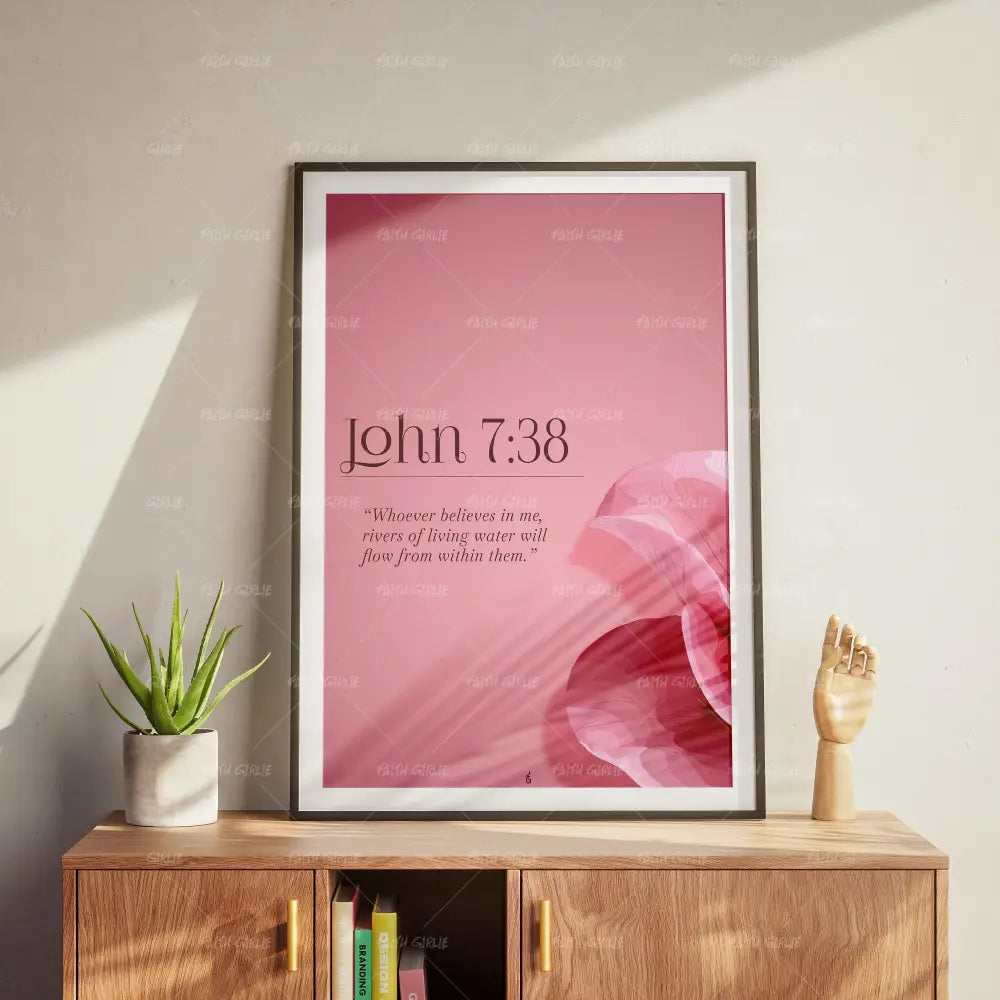
How Bible Verse Wall Art Can Support Scripture Reflection
Displaying Scripture in your home can provide a visual reminder of passages you are studying.
A Bible verse print near your desk might encourage you to revisit a meaningful teaching during the day.
Artwork inspired by the Psalms may remind you of themes such as worship, trust, gratitude, or God's faithfulness.
However, wall art should complement Bible reading rather than replace it.
A beautifully designed verse becomes more meaningful when you understand its original context and relationship to the surrounding passage.
For example, Philippians 4:13 is often displayed as a statement about personal achievement, but its context concerns Paul's contentment through changing circumstances.
Understanding that background gives the verse a richer meaning than its appearance as an isolated motivational statement.
Creating a Comfortable Bible Reading Space
You do not need a dedicated study room to read Scripture consistently.
A comfortable chair, adequate lighting, and a relatively quiet environment may be enough.
If you enjoy journaling, keep a notebook nearby for questions and reflections.
Some people also appreciate a small amount of Christian artwork or Scripture-inspired decor in their reading space.
The goal is not to create an elaborate devotional corner that looks impressive.
It is to make reading convenient and reduce unnecessary distractions.
A simple, functional space can support a meaningful routine.
Faith Girlie: Making Scripture Part of Everyday Life
At Faith Girlie, we believe Bible verses become more meaningful when people understand the message behind the words.
Christian wall art can provide beautiful reminders of Scripture, but the deeper value comes from knowing what those passages teach.
Our Bible verse art, Christian wall art, prayer-inspired designs, and contemporary faith-based artwork explore themes such as wisdom, hope, peace, courage, grace, and trust.
Whether you are beginning your first Bible reading plan or returning to a passage that has been meaningful for years, Scripture-inspired artwork can encourage reflection throughout your everyday spaces.
The purpose is not simply to display biblical words.
It is to keep learning from the truth they communicate.
Frequently Asked Questions
Where should a beginner start reading the Bible?
The Gospel of Mark or John is a practical starting point because both introduce Jesus' life and teachings. Acts and selected New Testament letters can follow.
Should I read the Bible from Genesis to Revelation?
You can, but beginners may find it easier to start with the Gospels before exploring the Old Testament and other biblical books.
What is the easiest Bible translation to understand?
The NLT, NIV, and CSB are commonly chosen for their accessible English. The best option is a reputable translation you can read and understand consistently.
How many chapters of the Bible should I read each day?
There is no required number. Begin with a manageable amount and focus on understanding what you read.
How do I understand difficult Bible verses?
Read the surrounding passage, identify the literary genre and historical context, and consult reliable study resources when necessary.
Can I read the Bible on my phone?
Yes. A Bible app can be a convenient way to read or listen to Scripture, especially during busy days.
Is it okay to highlight or write in my Bible?
Yes. Many Christians highlight passages or take notes to support their study. If you prefer not to write in your Bible, use a separate notebook.
What should I do if I miss a day of Bible reading?
Return to your routine when possible. Missing a day does not erase your progress or mean you need to restart an entire reading plan.
Is Bible verse wall art a good way to remember Scripture?
It can be. Displaying a meaningful passage may encourage reflection and memorization, particularly when you understand the verse in context.
Final Thoughts
Starting to read the Bible does not require advanced knowledge, a perfect routine, or an elaborate study system.
Begin with a manageable passage, choose a translation you can understand, and approach Scripture with curiosity and patience.
The Gospels offer a helpful introduction to Jesus, while Acts, the New Testament letters, Psalms, Proverbs, and the Old Testament narratives can gradually deepen your understanding of the larger biblical story.
Some passages will be immediately meaningful. Others may require additional study, questions, and time.
That is part of learning.
Rather than measuring success by how quickly you finish reading, focus on developing a thoughtful relationship with Scripture and allowing its teachings to shape your understanding of Christian faith.
At Faith Girlie, we create Christian wall art, Bible verse designs, prayer-inspired artwork, and contemporary faith-based pieces that encourage meaningful reflection on Scripture and everyday Christian living.


Leave a comment
This site is protected by hCaptcha and the hCaptcha Privacy Policy and Terms of Service apply.